



.png)
Company Factory
The company started building the first cement factory in the eastern Shuaiba industrial area, which started production on May 15, 1972 after building the first two mills for grinding clinker and gypsum and manufacturing cement, with a production capacity of 300,000 tons of cement annually.
To implement the company’s ambitious plans to keep pace with urban development and development project strategies in the country, the company had to improve its production to provide cement to the local market.
Therefore, the company carried out several expansions in the factory to increase the grinding production capacity starting in 1978 and continued in this manner by establishing several new grinding production lines in gradual stages.
The last stage was implemented at the end of 2009 when the company completed the construction of a new clinker unit, thus bringing the total production capacity of the factory to 3.8 million tons of cement annually, while the total operating capacity reached more than 5 million tons of cement annually.
Accordingly, Kuwait Cement Company has become the most important pillar in the national industrial edifice, and the main supporter of development projects and urban movement in the country.
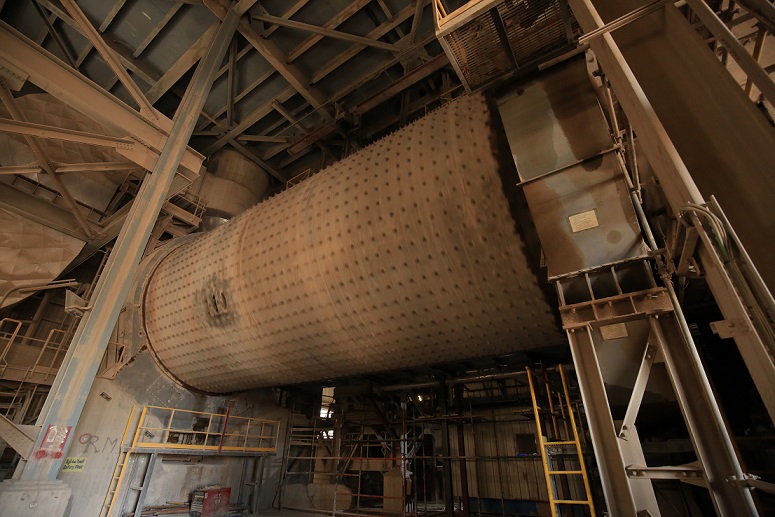
The system used in this conveyor belt is considered among the most efficient in the world in terms of handling raw materials.
In line with the company’s policy of completing its production lines and building an integrated cement industry, and in order to achieve its most important strategic objectives of localizing the cement industry in the country, the company has established two huge kilns for producing clinker (the main material for cement manufacturing) on the land of its factory in the Eastern Shuaiba Industrial Area.
The first kiln began operating in 2001 with a production capacity of 2.5 million tons per year.
The aforementioned factory was built and equipped with the latest technological capabilities and is considered one of the most important events that accompanied the company’s journey over the past four decades.
In addition, the company established two raw material mills with a capacity of 245 tons/hour each, two silos for storing clinker with a capacity of 50,000 tons each, and a pre-heater with a height of 126 meters.
Moreover, the construction of this kiln was carried out in conjunction with the installation of equipment for unloading and transporting raw materials from the vessels directly to the kiln feeding site within the plant using a 780-meter-long, 10-meter-high shaded conveyor belt across the road, with a design capacity of 1,500 tons/hour.
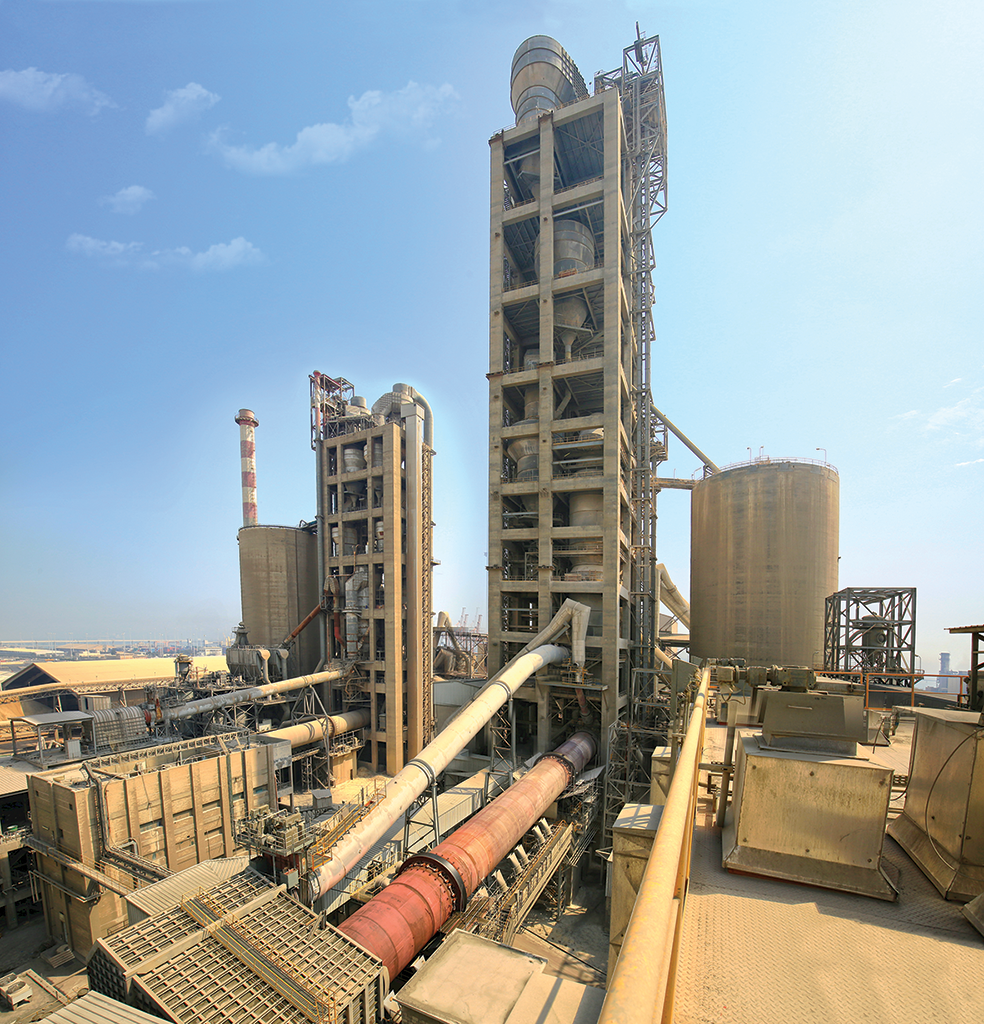
Since the company requires double the amount of clinker to cover the variation resulting from the expansion of cement grinding capacity, it constructed a second kiln for clinker production.
Trial operation of this kiln began in July 2013, and commercial production started in 2014 at the current plant site, with a clinker production capacity of 2.5 million tons per year. When added to the existing capacity, the total clinker production capacity becomes 5 million tons annually.
In addition, two raw material mills were installed, each with a capacity of 300 tons per hour, along with two clinker storage silos with a capacity of 60,000 tons, and a preheater tower with a height of 151.5 meters.
This plant is considered one of the largest in the Arabian Gulf region operating as an independent unit, a source of pride for the State of Kuwait.
As a result, the company is now capable of supplying the clinker required to produce 16,000 tons of cement per day, thereby achieving its objectives of localizing cement manufacturing, securing citizens’ needs for cement, and supporting the state’s strategic development plans as well as private projects.
Cement is automatically packed in Kuwait Cement Company factories using one of these two methods:
First: Packing from silos designated for transporting bulk cement, which is done automatically using special equipment and is weighed electronically.
Second: Packing cement into bags with a capacity of 50 kg each. Empty bags are transported and packed automatically using rotary packing machines.
The bags are then weighed using an accurate electronic method, then transported via multi-motion conveyor belts, and then loaded automatically onto vehicles using special equipment controlled by a computer that calculates the number of bags to be loaded.